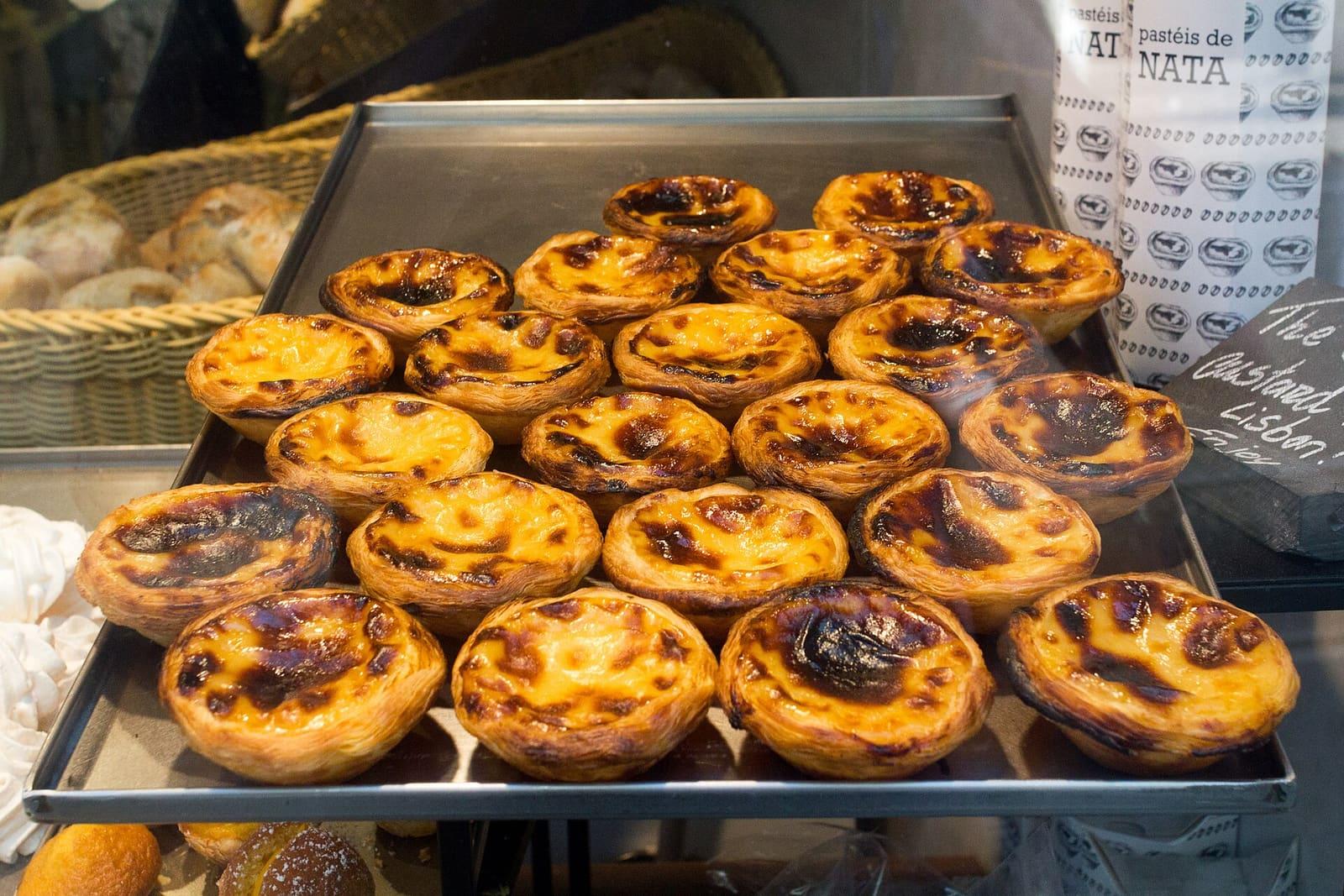
Every visitor asks me the same question on the first morning: where do I find the best pastel de nata? My honest answer is that the best one is the one still warm. This home version uses shop-bought puff pastry, so you only have to worry about the custard.
Method
- Turn the oven to its highest setting (250–280 °C) and let it heat for at least 30 minutes.
- Roll the pastry up tightly from the short side and cut it into 12 slices about 2 cm thick. Put each slice, spiral facing up, into the cup of a muffin tin. With a wet thumb, press from the centre outwards until the pastry is thin and reaches just above the rim. Chill while you make the custard.
- Boil the sugar and water for 3 minutes without stirring, until you have a clear syrup.
- Whisk the flour with a few spoonfuls of the cold milk. Heat the rest of the milk with the lemon peel and cinnamon, add the flour mixture and whisk for about 2 minutes, until it thickens.
- Pour in the syrup in a thin stream, whisking all the time. Take out the lemon and cinnamon and let it cool until just warm. Whisk in the yolks and pass everything through a sieve.
- Fill each cup three-quarters full and bake for 12–15 minutes, until the pastry is golden and the tops have dark spots.
- Let them rest for 5 minutes, then dust with cinnamon and icing sugar.
My tip
Don’t be shy with the oven. Those black spots are not a mistake — they are the whole point.
Where to taste the original
In Belém, the monks of the Jerónimos Monastery made these tarts until the religious orders were closed in 1834. A few years later, in 1837, a bakery next door started selling them with the monks’ recipe, and it is still a secret today. There they are called pastéis de Belém. When we visit the monastery together, we always stop for one — warm, at the counter, with a bica.
Want to taste the real thing?
On a tour, I’ll take you to the places where locals still order it.