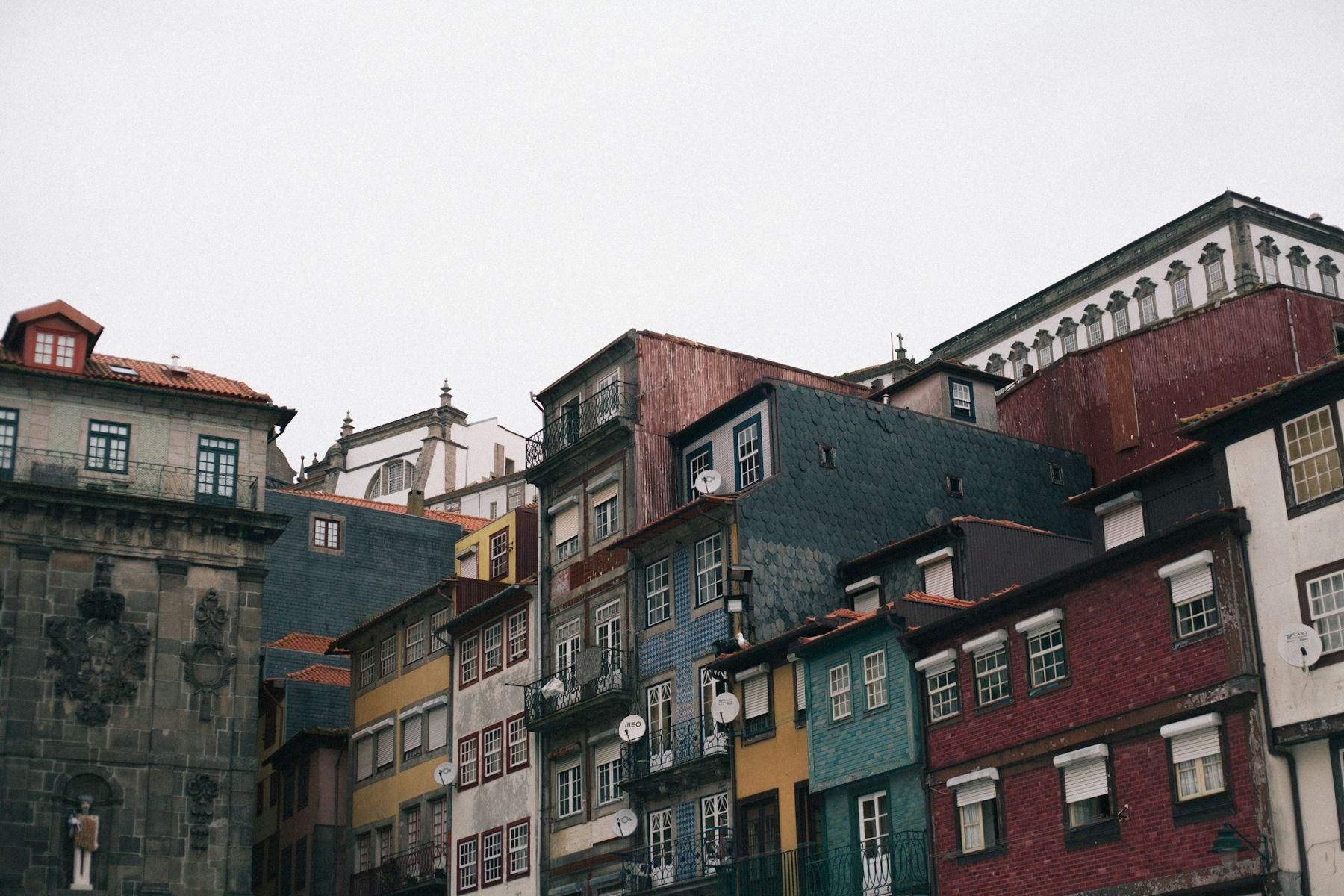
Stand on the Ribeira waterfront in Porto, look up the Douro, and you’ll see bridges stacked one behind the other like the pages of a history book. That’s exactly how I like to read them with my groups — one century at a time.
The bridge of boats
For centuries, crossing the Douro meant taking a boat, or using the Ponte das Barcas, a bridge made of boats tied together with cables. In March 1809, during the French invasions, thousands of people fleeing the city crowded onto it. The bridge gave way, and a great many lives were lost in the river.
On the Ribeira wall, near where the bridge once stood, there is a small bronze memorial, the Alminhas da Ponte. People still leave candles there. I always stop for a moment of silence with my groups before we walk on.
The age of iron
In the 19th century, Portugal wanted to join the modern world, and the railway had to cross the Douro. The answer was the Maria Pia Bridge (1877), a slender iron arch built by the company of Gustave Eiffel — years before his famous tower in Paris.
A few years later came the bridge that is now the symbol of the city: the Dom Luís I Bridge (1886), designed by Théophile Seyrig, who had worked with Eiffel. It has two decks: the lower one for cars and pedestrians at river level, the upper one, high above, now used by the metro and people on foot. Walking across the top deck at sunset, with Porto on one side and the port wine cellars of Vila Nova de Gaia on the other, is one of the great walks in Europe.
The age of concrete
In the 20th century Portugal had its own great engineer, Edgar Cardoso. His Arrábida Bridge (1963), near the mouth of the river, was at the time the largest concrete arch in the world. Decades later he also designed the São João Bridge (1991), which replaced Eiffel's old Maria Pia for the trains. The Maria Pia still stands, retired but beloved, right next to its successor.
Today, two more modern bridges — Freixo and Infante — complete the six bridges of Porto.
What the bridges really carried
Before roads and railways, the Douro itself was the highway. Flat-bottomed rabelo boats carried barrels of wine down from the terraced vineyards of the upper valley to the cellars in Gaia, where it aged into port. Every bridge you see was built by a city trying to connect that river trade to the rest of the country — and the rest of the world.
If you have one hour
- Start at the Ribeira and visit the Alminhas da Ponte.
- Cross the lower deck of the Dom Luís I to Gaia and look back at the city.
- Take the cable car or the steps up, and return on the upper deck.
- Finish with a glass of tawny port, looking at the bridge you just walked.
Every time I cross it, I think of everyone who couldn't — and of everyone who built a way across.
Explorámos isto juntos?
Conte-me o que ainda recorda — a sua nota vai para o livro de visitas.