On almost every tour, someone stops in the middle of a Lisbon street, points at a tiled façade and asks me, “Why are the walls covered in tiles?” The honest answer: they’re not just walls. They’re books.
A word that travelled a long way
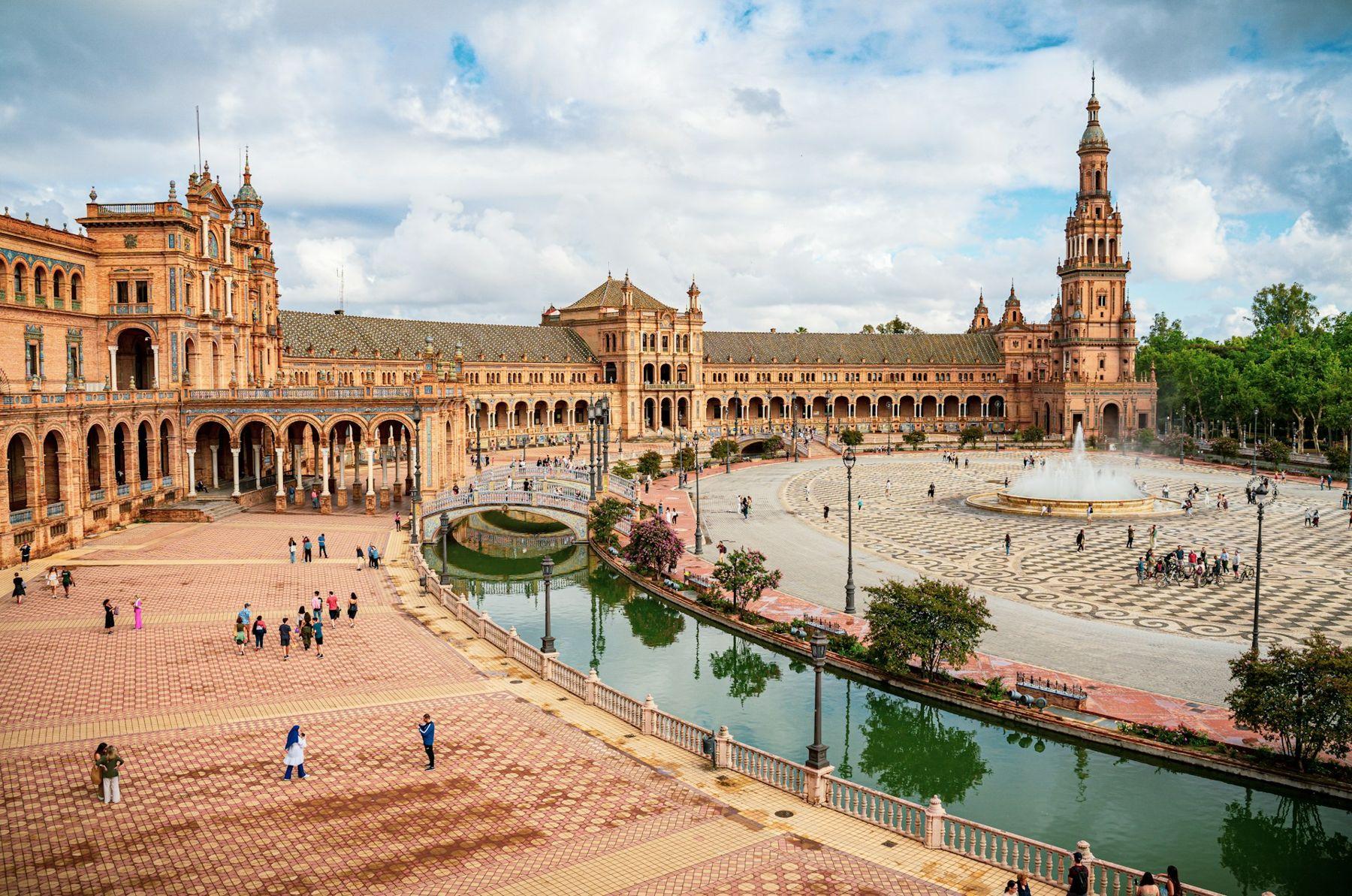
The word azulejo has nothing to do with azul, blue — although almost everyone assumes so. It comes from the Arabic az-zulayj, “small polished stone”. The technique arrived in Portugal from Seville at the end of the 15th century, and the story we love to tell is that King Manuel I came back from Spain so impressed by the tiled rooms of Andalusia that he wanted the same at home.
What started as decoration for kings became, over five centuries, the most Portuguese of all our arts.
Why so much blue?
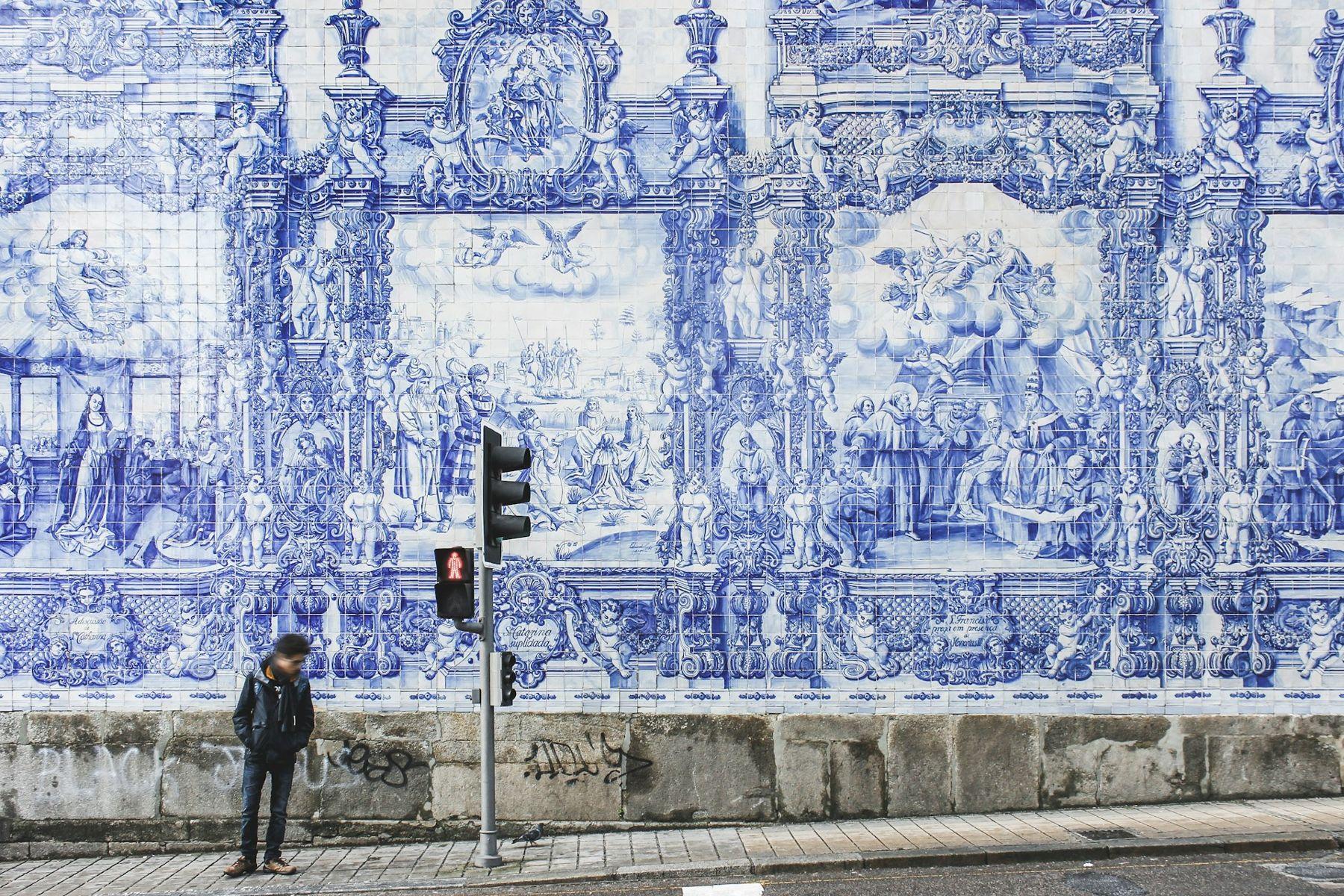
In the late 17th century, Chinese porcelain was the luxury everyone in Europe wanted, and Dutch potters in Delft were imitating it. Portuguese workshops followed the fashion — and never really stopped. Cobalt blue on white became our signature.
When you see a whole church interior in blue and white, you are looking at the 18th century’s idea of luxury — and of storytelling.
How to “read” a tiled wall
Read left to right, like a comic strip — the life of a saint, a hunt, a battle.
The wallpaper of Portugal, made fast to rebuild Lisbon after 1755.
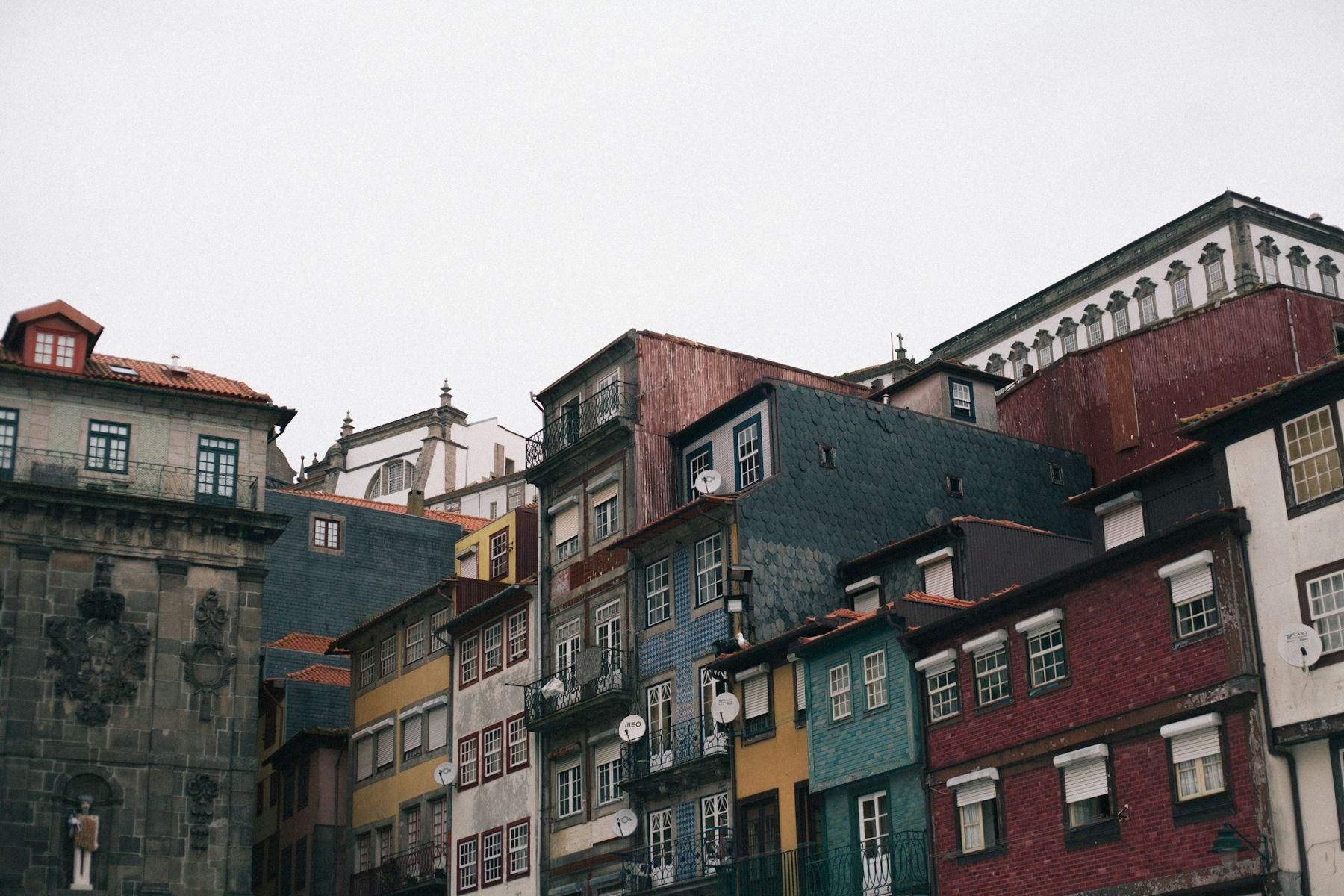
19th-century rain protection — and a way to show the family had done well.
Life-size tiled gentlemen bowing you in at the foot of palace stairs. My favorite secret.
Three places to start
- The National Tile Museum in Lisbon, inside the Madre de Deus convent.
- São Bento railway station in Porto — around twenty thousand tiles by Jorge Colaço.
- Any old neighborhood on a rainy day. Wet tiles glow. Alfama and Graça are perfect.
Next time we walk together, I’ll hand you a wall and see what you can read.
¿Lo exploramos juntos?
Cuénteme qué recuerda todavía — su nota irá al libro de visitas.